Arab voter turnout hits 1999 level as Netanyahu coalition faces its toughest test
Two million Arab Israelis are casting ballots in record numbers, driven by four years of marginalization under the current government and a desire to influence the next administration.
By Bianca Zhao ·
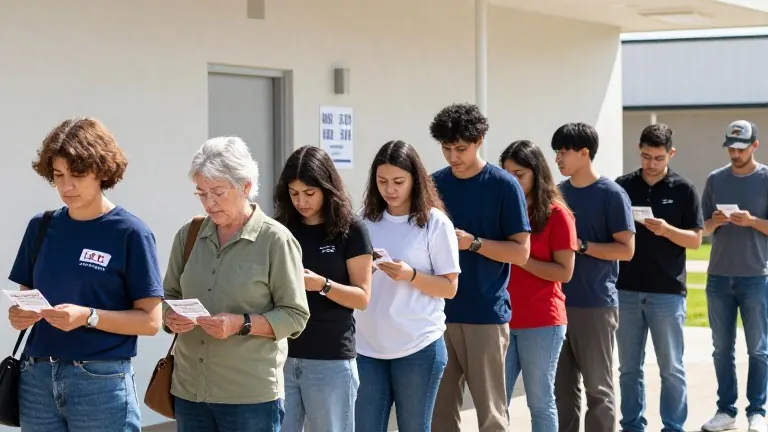
Arab Israelis are heading to the polls in numbers not seen since 1999, presenting a critical challenge to the outgoing government of Prime Minister Benjamin Netanyahu. Netanyahu warned throughout the campaign that Arab citizens were flooding the polls to endanger his rule, a claim that appears accurate given the historic turnout.
The last comparable surge in Arab participation occurred during the 1999 election, when voters largely supported Ehud Barak, ending Netanyahu's first term. Since then, turnout has generally declined, partly due to the trauma of October 2000, when police under Barak's government killed twelve Arab demonstrators in Jaffa. The Or Commission of Inquiry later cited grave failures in state treatment of Arab citizens, a memory that kept many at home for decades.
This election marks a shift from that historical reticence. The current coalition, described as the most radical in Israel's history, has alienated the country's two million Arab citizens over the past four years. Critics note that the government left Arab communities vulnerable to criminal gangs and state absence while media outlets fueled incitement against Arab doctors, journalists, and ordinary citizens. This treatment pushed voters out of apathy and back into the voting booths.
Political analysts argue that the surge is not a simple rally behind Arab parties, which are often viewed as an exclusionary club. Instead, some Arab citizens voted for Jewish-led parties, while others supported Arab lists without enthusiasm. The turnout reflects a sense of shared citizenship and responsibility, mirroring the solidarity shown by Arab and Jewish Israelis in October 2023 during the conflict.
Arab voters now hold significant power as potential kingmakers. In 2021, the Ra'am party provided the majority needed to unseat Netanyahu, becoming the first Arab party to join a coalition. The current opposition has been hesitant to formally promise a partnership with an Arab party, despite knowing its importance. Leaders of the opposition must now clearly state that at least one Arab party is a legitimate partner to avoid sending a message that Arab voices only matter when useful.
The decision on how to integrate Arab partners into the next government rests entirely with the opposition. They can either extend a hand to the two million citizens who turned out to defend the democracy or allow the outgoing coalition to remain in power through deadlock. This choice will determine whether Israel moves toward a model where every vote counts or continues to drift toward an isolated ethnocracy.
Source: The Jerusalem Post