Netanyahu faces 640,000 new voters in Tuesday Knesset election
Surveys indicate high turnout among 18 to 22 year olds, a demographic that could determine up to 12 seats in the 120-member parliament.
By Amir Mwangi ·
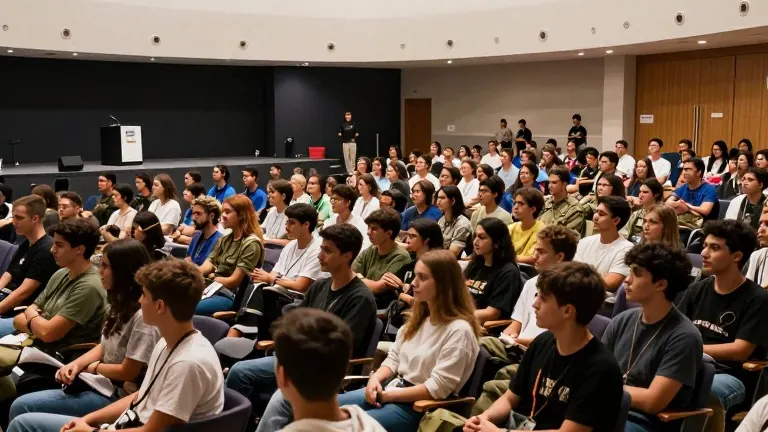
Prime Minister Benjamin Netanyahu, in power since 2009 with a brief hiatus in 2021 and 2022, faces a decisive challenge on Tuesday. An estimated 640,000 Israelis aged 18 to 22 will cast their first ballots, a group that represents nearly 10% of the total electorate. According to the Israel Democracy Institute, the voting patterns of these young citizens could decide as many as 12 seats in the 120-member Knesset.
Tammy Hoffman, head of the education policy program at the Institute, stated that Israel’s high birth rate ensures a young electorate. Her team’s May survey found that 80% to 95% of potential young Jewish and Arab voters intend to participate. This figure exceeds the 47% youth turnout recorded in the 2024 United States presidential election. Hoffman noted that secular Jewish youth expressed the highest certainty, while 87% of Arab respondents said they would vote.
Polling data suggests a mixed political alignment among this demographic. A September 23 survey by N12 found that 74% of young people identify as right-wing or center-right, while 23% identify as left-wing or center-left. If the election were held then, 16% would support Gadi Eisenkot’s Yashar party and 14% would vote for Netanyahu’s Likud. A separate poll by Ynet and Yedioth Ahronoth showed 67% of respondents were certain they would vote, with another 19% likely to do so.
National security and the cost of living are the primary concerns for these voters. Hoffman observed that this generation lived through the pandemic, judicial reform protests, and the October 7 attack. Although many are currently serving in the Israel Defense Forces, Hoffman cautioned that military service does not automatically produce nationalist voting habits. She said it often raises questions about war objectives.
Yael Chernyvsky, 18, from Ramat Hasharon, plans to vote for the opposition Change bloc. She cited the government’s management of the war and funding for haredi communities as key reasons for her choice. Omer Gross, 18, from Jerusalem, will vote for the Religious Zionist party led by Finance Minister Bezalel Smotrich, despite disagreeing with Smotrich’s policies in Gaza. Tomer Shiloh, 18, from Herzeliya, will vote for the Change bloc and advocates for mandatory military service for ultra-Orthodox men.
Khalel Alaa Sabeh, 18, from Shef-Amra, will vote for an Arab party to address resource gaps and crime in his community. He said he wants to see change and avoid four more years under Netanyahu. Sgt. M, a 22-year-old reservist, will vote for the Democrats party due to economic pressures. He noted that most university students must work to afford tuition and housing, making it difficult to pursue studies immediately after mandatory service.
Source: The Jerusalem Post