What Tesla's New FSD Plan Means for Southwest Drivers
Tesla has set a 2027 target for unsupervised driving, but only within specific city zones, shifting the product from a personal feature to a fleet service.
By Luka Tanaka ·
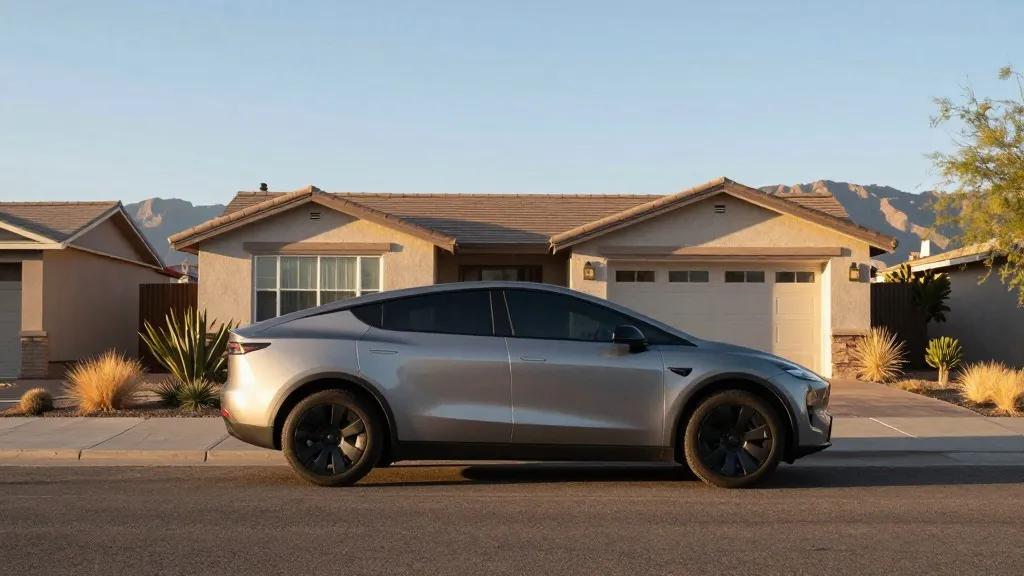
For car owners in the Southwest, the definition of autonomous driving has just changed. Tesla announced on its Q3 2026 earnings call that unsupervised Full Self-Driving (FSD) will arrive in the second quarter of 2027. However, this update will not allow owners to drive their vehicles anywhere without supervision. Instead, the technology will only function when the owner’s car is added to Tesla’s managed Robotaxi fleet. This means that unless you live and work within specific, limited service areas, your car will still require a human driver for most daily trips.
The shift represents a significant departure from the original promise made to FSD buyers. For nearly a decade, the expectation was that a software update would eventually allow a personal vehicle to drive itself anywhere, effectively turning the car into a mobile lounge or bedroom. The new plan narrows this scope considerably. Owners will not be getting a car that takes them on cross-town trips or highway road trips without supervision. The system will only operate unsupervised where Tesla’s Robotaxi service is already active, which currently covers small slices of six U.S. metropolitan areas.
This timeline is the latest in a long series of dates provided by Tesla leadership. In July 2025, CEO Elon Musk stated that unsupervised FSD would be available for personal use in certain geographies by the end of that year. A year prior to that, he expressed surprise if the technology wasn't ready the following year. Now, with the target pushed to Q2 2027, the product is more restricted. The system will operate on Tesla’s terms, within Tesla’s zones, using Tesla’s operational standards. This is a narrower offering than the ubiquitous, anywhere self-driving capability that has been marketed since 2016.
The current reality of these zones is modest. In the Southwest, cities like Miami, Orlando, and Tampa have launched Robotaxi services, but the geofences are small. In Miami, the service covers mostly West Miami and a strip toward Doral and Sweetwater. Orlando and Tampa launched in July with similarly limited areas. Within these zones, the vehicles stick to low-speed routes, largely avoid highways, and steer clear of complex urban environments. The service is designed for simplicity, not comprehensive coverage.
There are also regulatory hurdles that complicate the rollout. In the Bay Area, the service is not yet fully unsupervised because California rules require a safety driver in every car. Tesla has chosen not to release certain data to the California DMV, which is a requirement for moving beyond a Level 2 autonomous system. This regulatory stance limits where and how the technology can be deployed, particularly in regions with strict oversight like California.
The scale of the current fleet is also smaller than anticipated. By the end of Q3, Tesla reported nearly two million cumulative unsupervised miles driven. This includes the Cybercab, which joined the Austin fleet just a month before the quarter ended. Third-party tracking from earlier in the year suggested that only dozens of fully driverless Teslas were on the road, far fewer than the hundreds of thousands Musk had previously discussed. Meanwhile, competitor Waymo had already established operations in Orlando and Tampa before Tesla entered those markets, logging over three million miles.
For existing customers, particularly those with Hardware 3 (HW3), the news is mixed. These owners have been informed that their cars’ computers cannot run unsupervised FSD at all, and there is no clear upgrade plan in place. This leaves a segment of the customer base waiting for a hardware update that has yet to be detailed. The Q2 2027 timeline applies to the broader rollout, but the path to compatibility for older hardware remains uncertain.
AI chief Ashok Elluswamy emphasized that safety is the primary bottleneck. He explained that Tesla limits the system to low-speed roads and simpler environments to ensure reliability. He estimated that the remaining safety issues will be resolved by next year, though he acknowledged that the timeline is an estimate. The company is prioritizing a cautious approach, expanding only when it can guarantee a high level of safety within its controlled zones.
What happens next will depend on Tesla’s ability to expand these geofences and secure regulatory approvals in more states. If the Q2 2027 target holds, owners in the Southwest may see their cars join the Robotaxi network in a few more cities. However, until the zones expand to cover highways and larger urban areas, the unsupervised feature will remain a niche service rather than a universal capability. For now, the promise of a car that drives you anywhere is being replaced by a car that works for Tesla in specific places.
Source: Electrek · original report published