Iowa Farmers Skip Crop Insurance to Hold Winter Soil Nutrients
Maple Edge Farm owner Jon Bakehouse explains why federal rules force him to choose between soybean coverage and cover crop benefits.
By Amir Mwangi ·
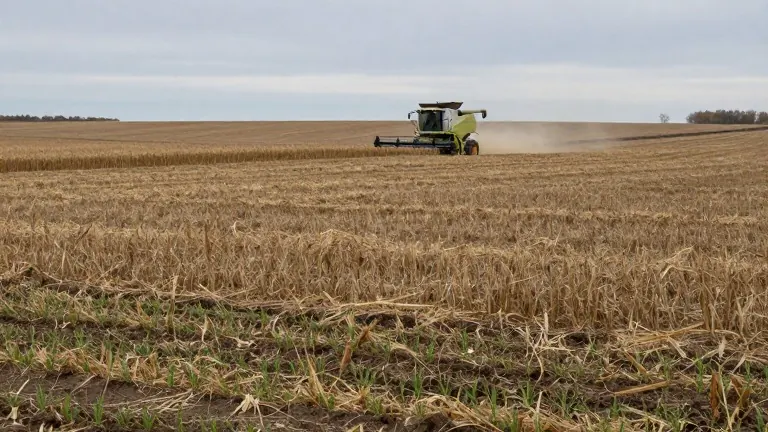
A Hastings, Iowa farmer has stopped carrying federal crop insurance on his soybeans to maintain a cover crop that helps filter nutrients from local waterways. Jon Bakehouse of Maple Edge Farm says the current rules make it difficult to balance environmental goals with financial protection.
Bakehouse has planted cereal rye after harvesting corn for the past ten years. The rye grows through the winter and into the spring. He says he and his team refined their system over the last three years to better capture the benefits of the practice. The Iowa Soybean Association notes that cover crops keep nitrogen in the soil rather than allowing it to leach into streams.
An Iowa State study found that approximately 23% of farmers in the state use cover crops. The Farm Bureau estimates this accounts for roughly 17% of Iowa cropland. Bakehouse cites labor and financial risk as primary barriers for other producers. He describes the work as intensive. His sister, Jeanne-Marie Bakehouse, recently traveled from Colorado to help operate the tractor and grain drill behind the combine.
The core conflict involves the federal crop insurance agency. Bakehouse explains that the agency requires cover crops to be terminated within three days of planting soybeans to maintain coverage. He argues this timeline is too short to gain the full environmental benefit. His farm terminates the rye three weeks after planting. Because of this extended period, he is ineligible for federal insurance on his soybeans.
Bakehouse acknowledges the agency has valid concerns about insuring two crops simultaneously. However, he states he is willing to forgo the financial safety net to allow the rye to do its work. He says the environmental health improvements are visible, even if the financial payoff is not immediate on a balance sheet.
The farm is currently in the middle of a transition period. The corn harvest is complete, and the rye is actively growing. Bakehouse hopes that improved incentives will encourage more producers to adopt similar practices.
The issue remains a point of discussion as Iowa seeks methods to enhance water quality. Bakehouse continues to manage his land with a focus on long-term soil health over short-term insurance eligibility.
Source: KMTV-TV
More Business · Unethical Practices · Report a business · Got a Story?