Humanoid Robotics: Tesla Extends Optimus Delivery Target to 2027
Tesla CEO Elon Musk announced that external deliveries of the Optimus robot will likely not begin until late 2027, citing unresolved issues with hand mechanics and AI reliability.
By Bianca Zhao ·
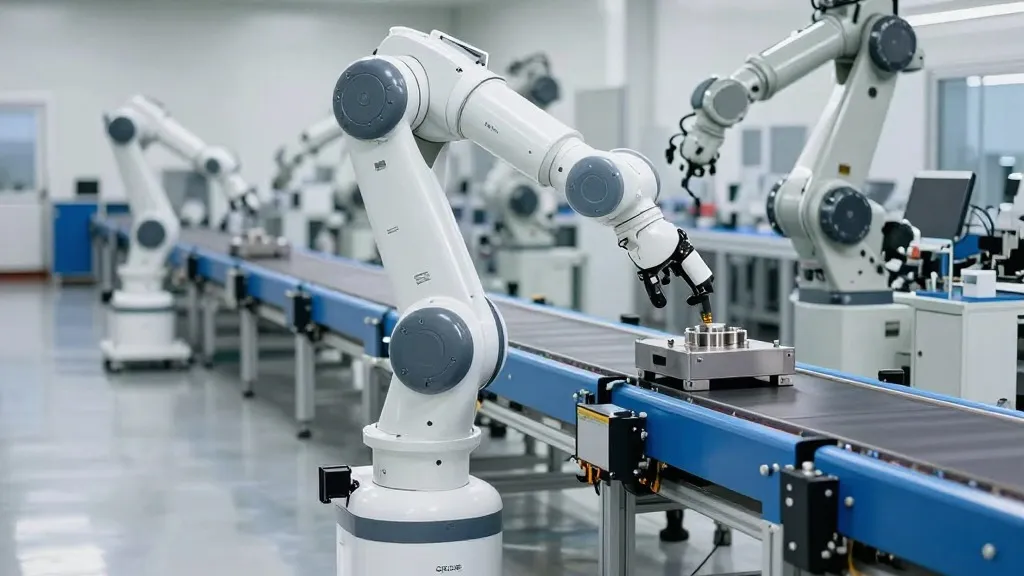
The competitive landscape for general-purpose humanoid robots remains fluid, with major automakers adjusting their production schedules to address persistent hardware and software challenges. On Tesla's Q3 2026 earnings call, CEO Elon Musk indicated that the company will begin delivering its Optimus humanoid robots to external customers around the end of 2027, a later timeline than previously suggested.
Musk identified the robot's hands, its overall durability, and its artificial intelligence capabilities as the primary hurdles remaining before mass external deployment. While he asserted that no other company is currently close to Tesla's progress in this specific field, the delay aligns with the broader industry struggle to create robots that can perform complex, unscripted tasks reliably.
Tesla has initiated early production of the Optimus on the high-volume line in Fremont, California, a facility that previously manufactured the Model S and Model X. Most of the infrastructure designed to support a potential annual output of one million units is already installed. However, Musk noted that reaching a target rate of approximately 20,000 units per week will take at least a year, possibly longer, as certain design elements are still undergoing modification.
A Tesla Optimus engineer identified the hand mechanism as one of the most difficult hardware components to finalize, alongside custom gears that present reliability concerns. Musk elaborated that the fingers must be soft enough to manipulate delicate items yet durable enough to withstand constant wear, a challenge compounded by the fact that robots cannot naturally heal like human skin. The company plans to integrate its AI5 chip into the Optimus around April 2027 to enhance its processing capabilities.
To address the lack of a large data-gathering fleet similar to that used for its autonomous driving features, Tesla intends to build between 10,000 and 20,000 robots. These units will undergo practice tasks in a facility referred to as an Optimus Academy. Musk also promised a video within the next one to two months demonstrating the robot performing tasks that are not pre-programmed, aiming to distinguish genuine autonomy from scripted demonstrations.
This development follows a period of shifting expectations for the Optimus project. In 2024, Musk suggested internal use in 2025 and high-volume external production in 2026. By January 2025, the goal was for roughly 10,000 robots to be built, with several thousand performing useful work by year's end, a target he later admitted was not met. Tesla’s Q3 shareholder letter now describes the units coming off the Fremont line as the first production-quality bots the company has manufactured, implying that earlier iterations were not of that standard.
Competitors continue to advance their own humanoid initiatives despite similar technical hurdles. XPeng activated an automated production line for its IRON robot in Guangzhou in September, with over 80% of core processes automated. The company targets mass production by the end of 2026 and deliveries to retail locations in the first half of 2027. Meanwhile, Boston Dynamics began producing its electric Atlas robot in January and has committed all its 2026 deployments, including to Google DeepMind and Hyundai, which plans to deploy 25,000 robots across its plants. Boston Dynamics recently hired Milan Kovac, Tesla’s former head of Optimus, in January. As these timelines converge, the industry awaits proof that these machines can move beyond impressive demos to provide consistent industrial value.
Source: Electrek · original report published