Colorado Glaciers: 2026 Thaw Accelerated Ice Loss
Research from Colorado State University found the Andrews Glacier thinned by more than 12 feet in a single year.
By Amir Mwangi ·
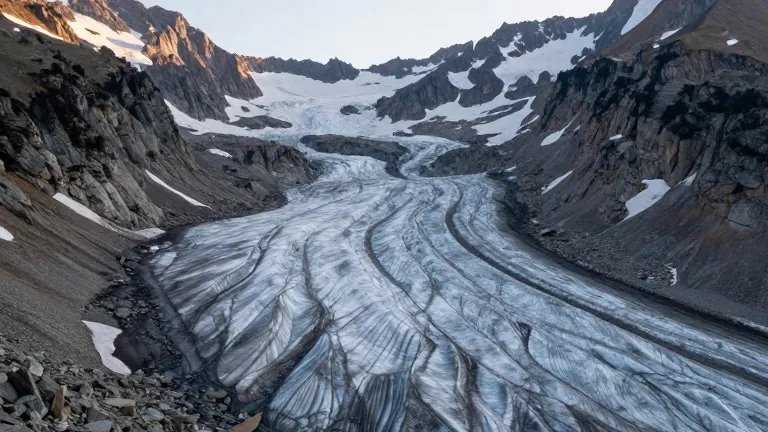
Colorado's major glaciers lost ice at twice their recent rate during 2026, shrinking under the state's lowest recorded snowpack and its hottest summer. Dan McGrath, a glaciologist at Colorado State University, measured the change after a year he called exceptional for the mountain environment.
McGrath's measurements show the Andrews Glacier thinned by more than 12 feet during the year. The Arapaho Glacier lost nearly 10 feet and the Isabelle Glacier lost about 6.5 feet. Those rates are double the thinning measured over the prior five years. In the decade before that, the glaciers lost a foot of thickness or less each year. St. Mary's Glacier, a snowfield used by hikers and skiers, melted completely in September.
The losses fit a pattern seen elsewhere. More than 7 trillion tons of ice has disappeared worldwide since 2000. Swiss glaciers shed 5.5 percent of their volume this year, the second-largest drop recorded. In Washington state, researchers surveyed six glaciers on Mount Baker and found the fastest average retreat since 1950. A study co-authored by Brian Menounos of the University of Northern British Columbia found that about one-quarter of glaciers in the contiguous United States have disappeared since the mid-1900s.
McGrath said the Colorado glaciers are now out of balance with the climate. The Andrews Glacier has lost half its ice since 2017. He said the current thinning rate could end them within 20 years. Harlan Ulmer, a 20-year-old student at Colorado State University, has photographed the glaciers each year since 2022 while volunteering for McGrath's project. Ulmer said he is documenting changes he can record now.
McGrath said the losses extend beyond Colorado. "What we're witnessing is the loss of that part of Colorado's identity. And it's not just Colorado," he said. Menounos said wildfires speed the melting when soot and dust darken glacier surfaces and absorb more sunlight. He added that glaciers could reform if carbon pollution drops and temperatures fall enough for snow to build year-round, but that process may take several hundred years.
McGrath's measurements for 2026 are complete. He said the glaciers are thinning at a rate that could end them in the next 20 years.
Source: The Denver Post