Transit Automation: $1B D.C. Plan Targets 2033 for Driverless Red Line
Washington and Los Angeles pursue fully automated rail systems while Honolulu expands its existing driverless network.
By Luka Tanaka ·
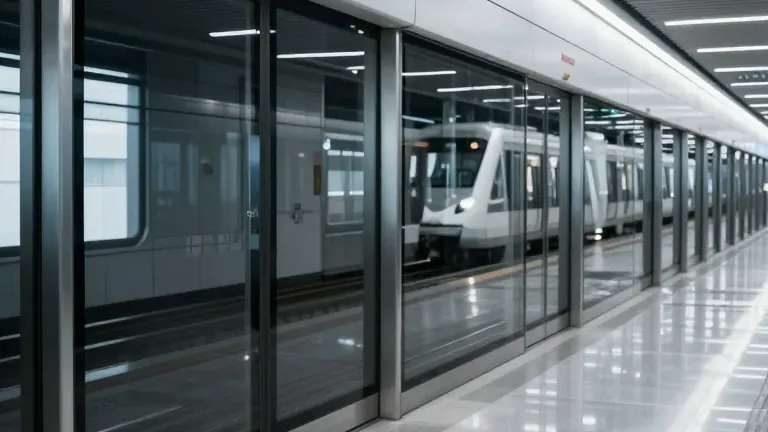
Nearly $1 billion is the price tag attached to a plan in Washington, D.C., that could remove human operators from the Metro Red Line as early as 2033. The Board of Directors approved the budget in April, aiming to upgrade the route with safety features such as protective barriers that prevent passengers from entering the tracks. This move marks a renewed push for full automation in a system where human operators have been standard practice for decades.
The push for driverless transit in the United States has moved slowly compared to on-road self-driving vehicles. Companies like Waymo, Tesla, and Zoox have taken the lead in automation, while mass transit systems have largely retained drivers. In Washington, D.C., automated features existed when the Metro opened 50 years ago but were suspended after a fatal crash. Those features were restored over the past two years, setting the stage for the current proposal.
The timeline for full automation on the Red Line is now in motion following the April board vote. An environmental review is also underway in Los Angeles for a new heavy-rail line that would run automatically through the Santa Monica Mountains. This project aims to connect the San Fernando Valley with the Westside employment hub, a route currently plagued by severe traffic congestion.
Honolulu provides a benchmark for these efforts with its Skyline light metro, which opened three years ago and expanded last year. The system is the most extensive automated transit network in the U.S., stretching 19 miles when complete. It surpasses the pilot driverless projects in Detroit and Miami, the Las Vegas monorail, and various airport shuttle systems.
Baruch Feigenbaum, senior managing director of transportation policy at the Reason Foundation, argues that American cities lag behind international peers in Europe, Asia, Canada, Australia, South America, and the Middle East. He contends that fixed-rail systems are easier to automate than on-road vehicles due to fewer obstacles. Feigenbaum stated that the transit world is where innovation goes to die, suggesting that major projects in D.C. and Los Angeles could signal technological feasibility to other systems.
Randy Clarke, CEO of the Washington Metropolitan Area Transit Authority, noted that the 2009 crash at Fort Totten station, which killed nine people, paralyzed automation plans for years. The National Transportation Safety Board attributed the collision to a maintenance issue in the automated signaling system. Clarke emphasized that the restored cruise control system is different from the failed signaling infrastructure and is highly regulated and documented. He added that workers will still be required to maintain tracks and respond to emergencies, even if they are not physically running the trains.
Unions remain critical of the shift. John Samuelsen, international president of the Transport Workers Union, has led efforts to oppose automation in New York and elsewhere. He described the trend as a catastrophe waiting to happen, specifically citing the danger of self-evacuation in systems that run on a third rail. Samuelsen warned that passengers would be left dealing with the consequences of automated failures.
Vance Tsuda, project director for the Honolulu Skyline, reported that the system has recorded no crashes or injuries related to automation since its launch. He argued that human operators are more likely to overlook issues like open doors before clearing a train for departure. David King, an associate professor of urban planning at Arizona State University, countered that public transit must maintain a perfect success rate to keep public trust. He noted that the sector tolerates failure in private industry, such as SpaceX rocket launches, at a rate that would be unacceptable in the public sector.
Cecily Way, who oversees planning for the Sepulveda Project for LA Metro, said the new Los Angeles line will use shorter, more frequent trains. Like the Washington proposal, the Los Angeles line will feature station doors to protect passengers on the platform from oncoming trains. The project is currently undergoing an environmental review, with implementation expected to take years.
Source: Sentinel Colorado
More Business · Unethical Practices · Report a business · Got a Story?