
Fake crystals flood Sedona shops
Sedona shop owner Jamie Inglett says buyers can lose money on lab-grown stones sold as natural gems.
By Bianca Zhao ·
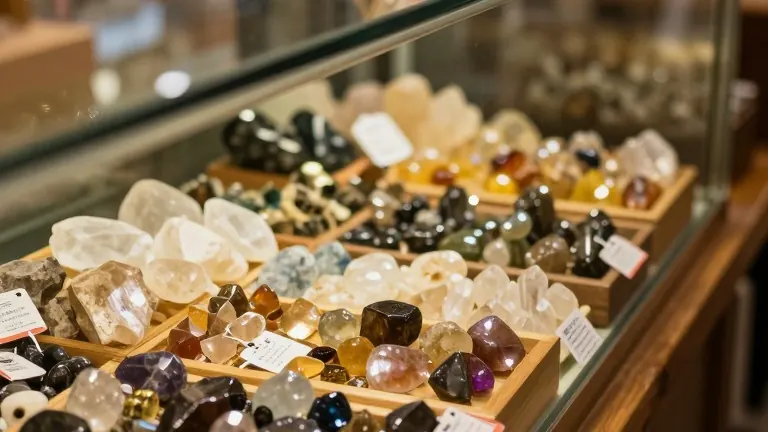
Fake crystals are common in Sedona shops, according to local industry owners who say the market is flooded with imitations.
Jamie Inglett, who runs a crystal shop in the Arizona town, said she has seen lab-grown crystals sold as natural stones for more than $100. She noted that similar stones often sell for $5 to $20 online. Inglett stated that sellers sometimes do not disclose that the stones are lab-grown, leaving buyers to pay a premium for a product that is not natural.
The popularity of crystals has grown rapidly on social media. The hashtag #crystals has generated 20 billion views on TikTok. Inglett built her business online before opening a physical storefront in Sedona, where she now has 215,106 Instagram followers. She said the trend continues to drive demand for physical gemstones.
Shannon Wimberly, a crystal collector, said she has purchased fake crystals in the past. She now inspects purchases more carefully to avoid buying synthetic items made from plastic or glass. Wimberly said she has run into fake stones and started scrutinizing other details more closely.
Inglett advised buyers to ask shops about the origin of their stones. She said sellers should be able to name the country of origin or the specific mine. She also recommended checking physical traits to identify fakes. Glass imitations sound different when tapped and do not feel cold to the touch. They may also have unnatural dye patterns. Fake moldavite stones lack the grooves and textures found in natural versions and appear too uniform in shape.
Inglett said lab-grown crystals are acceptable if sellers are transparent about what they are selling. She told consumers to do their own research before buying. Inglett said buyers do not need to believe in crystal healing to appreciate the beauty of the stones.
Source: KCTV5
More Business · Unethical Practices · Report a business · Got a Story?